


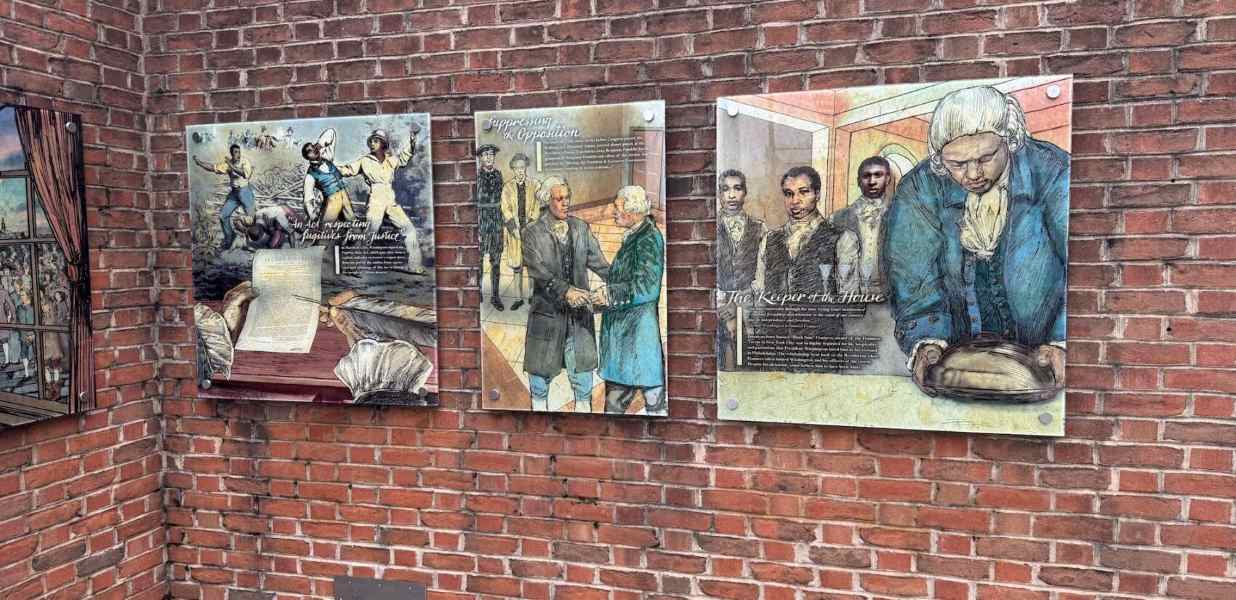
A historic exhibit detailing the lives of enslaved individuals who served President George Washington at the President’s House on Independence Mall has been reinstated following a federal court order. This move comes after the Trump administration removed the exhibit in January, sparking a legal and public outcry. The restored exhibit, which had been a staple of the site since 2010, honors the nine people enslaved by Washington while Philadelphia served as the nation’s capital.
The removal of the exhibit, which depicted the lives of enslaved people such as Oney Judge and Richmond, ignited a legal battle between the City of Philadelphia and the U.S. Department of the Interior. Mayor Cherelle L. Parker led the city’s lawsuit against the National Park Service (NPS), arguing that the removal violated a longstanding partnership agreement. The dispute was further complicated when the Trump administration issued an executive order in March 2025, seeking to reframe how American history—especially regarding slavery—was represented at national landmarks.
In a ruling that has drawn significant attention, U.S. District Judge Cynthia Rufe issued an injunction ordering the immediate restoration of the exhibit by Friday, February 20, 2026. Judge Rufe, in her opinion, sharply criticized the administration’s actions, drawing a comparison between the removal of historical content and the “Ministry of Truth” in George Orwell’s 1984, a novel that explores themes of totalitarianism and historical revisionism. “The federal government does not have the power to erase historical truths,” Rufe wrote, underscoring the importance of preserving historical integrity at public sites.
As National Park Service workers began reinstalling the exhibit panels, local residents and visitors expressed their relief and gratitude. Bill Rooney, a Chestnut Hill resident, observed the restoration process and remarked, “It feels like history is being made again. To have that history removed was a step back, and it wasn’t right.”
Jasmine Gutierrez, visiting from Lakeland, Florida, brought her children, ages 8 and 11, to witness the restoration. She reflected on how they had questioned the removal of the exhibit, calling it an attempt to “erase history.” “This is why it’s important for them to understand their history,” she said, adding that her children now realize the significance of standing up for truth.
As workers carefully restored the panels, the atmosphere was filled with a sense of triumph. Some passersby even applauded, while one National Park Service employee responded humbly, “It’s our honor” when thanked by a local resident.
The court’s ruling marked a significant victory for advocates of historical accuracy and transparency, ensuring that the President’s House site, a critical part of Philadelphia’s historical landscape, will continue to educate visitors about the lives of the people who were enslaved by Washington.
The exhibit, which had been a joint effort between the city and the National Park Service, had become a symbol of the nation’s commitment to confronting its difficult history. For over a decade, it provided invaluable insight into the history of slavery at a site that was integral to America’s founding. Now, with the 250th anniversary of the United States approaching, the restored exhibit will play an important role in commemorating America’s complex past.
Governor Josh Shapiro and many local activists have praised the court’s decision as a triumph for truth-telling, stressing the importance of educating the public about the painful realities of slavery in the nation’s history. Fred Miller, a Philadelphia resident who visited the site on the day of the restoration, echoed these sentiments, expressing hope that the ongoing public pushback will prevent future attempts to rewrite the history of slavery in America.
