


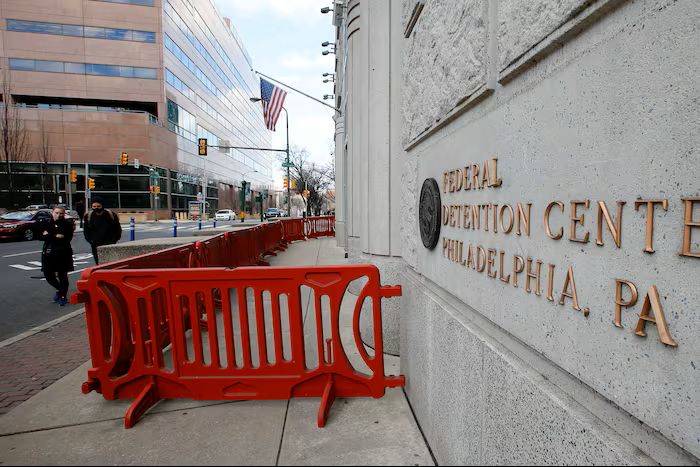
Philadelphia’s Eastern District Federal Court has become the epicenter of a rising tide of legal challenges from undocumented immigrants, largely due to changes in immigration detention policies. A detailed review of court records reveals a striking increase in habeas petitions—legal challenges filed by detained immigrants seeking release from detention. In just the first six weeks of 2026, 168 cases were filed, already surpassing the total number of filings for all of 2025. This dramatic shift represents a deeper trend as the nation grapples with contentious new enforcement policies.
The surge in lawsuits, primarily focused on challenging mandatory detention, is a direct consequence of the Trump administration’s aggressive immigration policies. Under these new regulations, immigrants encountered by authorities are now detained without the option to request bond hearings. This policy has had a profound impact on immigrants who had once been eligible for release while their cases were pending, particularly affecting those who have been long-term residents or individuals who had failed to comply with ICE check-ins.
Historically, Philadelphia’s immigration court filed only a handful of detention-related cases each year. However, recent policy shifts have made these legal battles far more common, filling courtrooms with individuals fighting for their freedom amid changing, often contradictory policies. Judge Paul Diamond of the Eastern District noted that these petitions now account for one-sixth of all civil cases in the district, marking a sharp increase in theworkload for the already strained legal system.
While Philadelphia’s courts are seeing an uptick, this trend is not limited to Pennsylvania. Immigration courts across the country are buckling under the strain of the new detention policies. In New Jersey, Chief Judge Fred Biery of the Third Circuit Court implemented new procedures to cope with the rising number of habeas petitions, noting that the courts are increasingly unable to process the flood of cases efficiently. Elsewhere, in Minnesota, a judge went so far as to hold a Justice Department attorney in contempt for failing to comply with orders related to an immigrant’s release, underscoring the frustrations felt by the judiciary in the face of what many view as an overzealous approach to immigration enforcement.
Judges across the country have expressed growing frustration with the government’s mandatory detention policies. In California, Judge Sunshine Sykes sharply criticized the federal immigration system, arguing that the policy violated court orders and undermined fundamental principles of justice. Her ruling echoed concerns raised by other courts, which have found the detention policies to be excessively punitive and legally questionable.
In Texas, Judge Fred Biery went as far as ordering the release of a young child detained by ICE, condemning the government’s tactics as inhumane. “A perfidious lust for unbridled power” was how Biery described the administration’s relentless pursuit of these detention practices, highlighting the growing sense of judicial resistance to the federal government’s stance.
For the immigrants directly affected by these policies, the consequences are far-reaching and personal. Take the case of a Venezuelan man in Philadelphia—he appeared in court to seek asylum after losing Temporary Protected Status (TPS), a program that had granted him legal status and protection from deportation. His status had been terminated in 2025, and now he finds himself with no clear legal pathway, forcing him to seek asylum or face deportation.
This case is just one of many in which immigrants are forced to navigate a complicated legal landscape, often without legal representation. Unlike other legal proceedings, immigration court does not provide free lawyers to those who cannot afford them, leading to widespread self-representation. Legal experts warn that the inability to secure legal counsel often results in unfair proceedings, which could jeopardize the future of many immigrants.
Despite the growing caseload and legal battles, small moments of levity and human connection persist. In a December session, Judge Joseph Scott found himself smiling as an immigrant from Richmond, Virginia, explained his preference for traveling to Philadelphia for his hearings. When asked why he wouldn’t want his case moved closer to home, he replied simply, “I visit my friends and eat food from my country.” The judge’s response—chuckling and acknowledging the importance of personal connection—offered a brief but welcome reprieve from the weight of the legal proceedings.
Such moments are a reminder of the broader human experience at the heart of these legal cases. However, they also underscore the ongoing struggle of many immigrants who must contend with an overwhelmed system and shifting policies that complicate their already uncertain lives.
As the number of petitions continues to rise, Philadelphia’s immigration court finds itself at the intersection of legal challenges, shifting immigration policies, and the personal battles of immigrants facing the real possibility of deportation. The ongoing rise in cases challenges the very foundation of the nation’s immigration system, pushing courts, lawyers, and immigrants into an uncertain future where the only certainty is the unpredictability of the policies being enforced.
